

Madrid is a city of neighborhoods, and each one has its own identity. For travelers visiting Spain’s capital, exploring its neighborhoods is one of the best ways to understand the city’s essence, history, lifestyle, and cultural diversity. Instead of focusing only on landmarks, walking through local streets and relaxing in neighborhood squares reveals how Madrid truly lives.
This Madrid neighborhood guide for tourists explains what you can do in the city’s main areas, what makes each neighborhood special, and how to move around easily using Madrid’s excellent public transportation system. It is designed for visitors who want to go beyond the usual tourist routes and experience Madrid in a more authentic way.
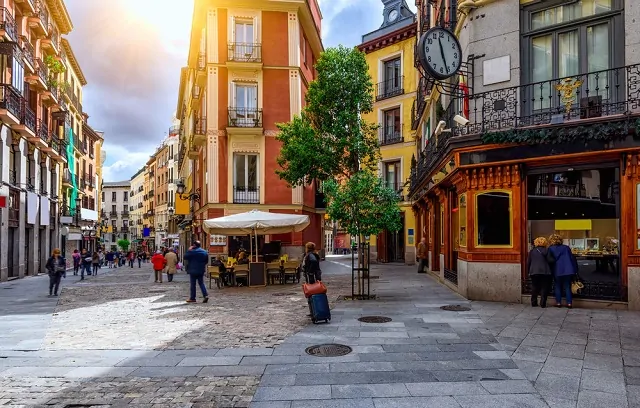
Centro: The Historic Heart of Madrid
Centro is the ideal starting point for any first-time visitor. This area is home to some of Madrid’s most iconic landmarks, including Puerta del Sol, Plaza Mayor, and the Royal Palace. As a result, it is one of the liveliest parts of the city.
Here, travelers can visit museums, enjoy traditional Spanish food, and wander through historic squares filled with street performers. Getting to Centro is simple, as several metro and bus lines connect at stations such as Sol, Ópera, and Callao.
La Latina: Tradition, Tapas, and Local Atmosphere
La Latina is one of the most character-filled neighborhoods in Madrid. It is famous for its tapas bars, traditional taverns, and outdoor terraces, especially on weekends. This area offers a truly local experience for travelers interested in Spanish gastronomy and social life.
One of its main highlights is El Rastro, Madrid’s most famous open-air market, held every Sunday. To get there, visitors can take the metro to La Latina or Tirso de Molina, both well-connected stations.
Malasaña: Alternative Culture and Creative Energy
Malasaña is known as Madrid’s bohemian and alternative neighborhood. Its streets are full of independent cafés, vintage shops, street art, and live music venues. For tourists looking for a younger and more creative vibe, this area is a great choice.
Walking without a fixed plan is part of the charm here. Additionally, Malasaña is easy to reach by metro, with nearby stations such as Tribunal, Noviciado, and San Bernardo.
Chueca: Diversity and Modern Lifestyle
Chueca is one of the most vibrant and modern neighborhoods in Madrid. It is widely known for its open-minded, diverse, and cosmopolitan atmosphere. During the day, it is perfect for shopping and terrace dining. At night, it becomes a lively hub of bars and restaurants.
Since it is located close to Gran Vía and Sol, many visitors arrive on foot. However, Chueca also has its own metro station, making access quick and convenient.
Salamanca: Elegance and Exclusive Shopping
Salamanca represents Madrid’s most elegant and sophisticated side. This neighborhood is known for its wide avenues, classic architecture, and luxury shopping streets. Travelers interested in high-end brands and refined dining will feel at home here.
In addition, Salamanca offers excellent restaurants and art galleries. Several metro lines serve the area, with stations such as Serrano, Velázquez, and Goya providing easy access.
Chamberí: Authentic Local Life
Chamberí is a residential neighborhood that maintains a strong local identity. It is ideal for travelers who want to see everyday life in Madrid beyond tourist-heavy zones. Traditional markets, quiet squares, and neighborhood bars define this area.
Thanks to its central location, Chamberí is well connected by metro and bus, with stations like Iglesia, Bilbao, and Alonso Martínez.
Lavapiés: Multicultural Madrid and Urban Art
Lavapiés is one of Madrid’s most multicultural neighborhoods. Its diversity is reflected in international cuisine, cultural centers, and the vibrant atmosphere of its streets. It is a great place to experience a different side of Madrid.
In addition, Lavapiés is known for its urban art and alternative cultural scene. Travelers can reach it easily by metro at Lavapiés or Embajadores stations.
Retiro: Nature and Relaxation in the City
The Retiro neighborhood revolves around El Retiro Park, one of Madrid’s most important green spaces. This area is perfect for relaxing, walking, or simply taking a break from sightseeing.
Beyond the park, the neighborhood includes museums and quiet residential streets. Metro stations such as Retiro, Ibiza, and Príncipe de Vergara make it easy to reach.
Getting Around Madrid Neighborhoods
Madrid has one of the most efficient public transportation systems in Europe. The metro connects nearly every neighborhood, while buses operate throughout the city, even at night. For tourists, this makes it easy to explore multiple areas in one day.
Walking is also a great option in central districts, as many neighborhoods are close to each other. Along the way, visitors often discover unexpected corners and local spots.
Discover Madrid Neighborhood by Neighborhood with a Guided Tour
Exploring Madrid’s neighborhoods becomes even more rewarding with a local guide. At Things To Do In Madrid, we offer guided city tours designed to help travelers discover the most iconic neighborhoods, their history, hidden details, and local stories.
Our tours are created for visitors who want to understand the city better, stay oriented, and make the most of their time. Each route is organized, comfortable, and rich in cultural context.
Madrid is not just one city—it is many cities within one. Exploring its neighborhoods is the best way to experience it fully. Contact us today, book your tour, and discover Madrid neighborhood by neighborhood with local experts.
Frequently Asked Questions
What is the best neighborhood to stay in Madrid for tourists?
Centro, Malasaña, and Salamanca are popular choices due to their central location, good transport connections, and variety of attractions.
How can tourists move easily between Madrid neighborhoods?
The metro is the fastest and most efficient option. Buses and walking are also excellent alternatives, especially in central areas.
Follow Things To Do In Madrid
Discover more travel tips and experiences in Madrid:

 English
  Spanish